


15268 Bearing
Inner diameter: 15mm
Outer diameter: 26mm
Width: 8mm
Chamfer (r): 0.3
Non-standard Deep Groove Ball Bearing
What Is Non-standard Deep Groove Ball Bearing
Non-standard deep groove ball bearing are bearings that are not compatible with the standard bearing size structure, that is, bearings produced according to customer requirements. Non-standard internal and external 49 standard 50, everything else is the same.
-
![Deep groove ball bearing]()
-
![Stainless Steel Deep Groove Ball Bearing]() Stainless Steel Deep Groove Ball BearingSR4 Bearingread more
Stainless Steel Deep Groove Ball BearingSR4 Bearingread more
Inner diameter: 6.35mm
Outer diameter: 15.875mm
Width: 4.978mm
Chamfer (r): 0.3 -
![ball bearing diameter]() ball bearing diameter20254 Bearingread more
ball bearing diameter20254 Bearingread more
Inner diameter: 20mm
Outer diameter: 25mm
Width: 4mm
Chamfer (r): 0.1 -
![ball bearing distributor]() ball bearing distributor17287 Bearingread more
ball bearing distributor17287 Bearingread more
Inner diameter: 17mm
Outer diameter: 28mm
Width: 7mm
Chamfer (r): 0.3 -
![Stainless Steel Deep Groove Ball Bearing]() Stainless Steel Deep Groove Ball BearingS20254 Bearingread more
Stainless Steel Deep Groove Ball BearingS20254 Bearingread more
Inner diameter: 4.763mm
Outer diameter: 12.7mm
Width: 4.978mm
Chamfer (r): 0.3 -
![Stainless Steel Deep Groove Ball Bearing]() Stainless Steel Deep Groove Ball BearingS17287 Bearingread more
Stainless Steel Deep Groove Ball BearingS17287 Bearingread more
Inner diameter: 9.525mm
Outer diameter: 22.225mm
Width: 7.142mm
Chamfer (r): 0.4


Why Choose Us
Quality Assurance: ISO9001, IS014001, ISO45001, IATF16949, high-tech enterprise, specialized new enterprise.
Cutting-edge technology: The company has its own bearing parts factory, which produces rings, cages, shield and seals, which can deal with flexible and diverse Market demand.
Quality Services: We have a professional R&D and design team that designs and develops according to customer requirements and usage conditions.Professional guidance on the use and installation of bearings, making every effort to ensure bearing quality, and fully cooperating with after-sales service.
Applications of Non-Standard Deep Groove Ball Bearing
Automotive
Non-standard deep groove ball bearing are used in automotive applications to support rotating shafts, reduce friction and increase the efficiency of engines and transmissions.
They are commonly found in axle assemblies, drive shafts, transmissions, alternators, and starter motors.
These bearings are designed to handle radial and thrust loads in either direction and can operate at high speeds with minimal heat build-up.
They are a reliable choice in automotive applications due to their low maintenance needs and long service lifetimes.
Industrial Machinery
Non-standard deep groove ball bearing are widely used on industrial machineries such as conveyors, pumps, fans, blowers, and compressors.
These bearings provide a low-friction solution for these machines, which helps them run more efficiently for increased productivity.
By utilizing non-standard deep groove ball bearing, industrial machinery runs more smoothly and requires less energy input to keep it running at optimal performance levels over an extended period.
Additionally, non-standard deep groove ball bearing can withstand large shock loads without compromising the integrity of the equipment while offering superior protection against wear and tear over other bearing types.
Aerospace:
In aerospace applications, non-standard deep groove ball bearing play an important role in reducing friction between moving parts while also providing stability during operation at high altitudes or speeds where vibration is more likely to occur.
These precision bearings can support heavy axial and radial load capacities and resist vibration or misalignment up to certain limits thanks to their highly engineered construction materials, including hardened steel and specialized lubricants that offer superior protection against the rigors of air travel.
Non-standard deep groove ball bearing are trusted components in many modern aircraft designs, from helicopters to airplanes, due to their ability to maintain high-performance standards even under extreme conditions ensuring safe air travel for passengers across the globe.
Agriculture
While farming machinery has traditionally utilized simpler bearing types such as roller or needle bearings for its various moving parts,;
non-standard deep groove ball bearing have become increasingly popular thanks to their superior strength and reliability when exposed to dirt and debris common on farms throughout the world.
Thanks to advancements in engineering technology, these ultra-durable precision bearings can now be equipped with a range of specialized seals that protect the internal components from dust contamination while still allowing them to rotate freely without extra drag or resistance – thus increasing efficiency when operating heavy farm machineries such as combine harvesters or balers saving both time and money which is essential for successful agricultural operations today.
Types of Non-Standard Deep Groove Ball Bearing
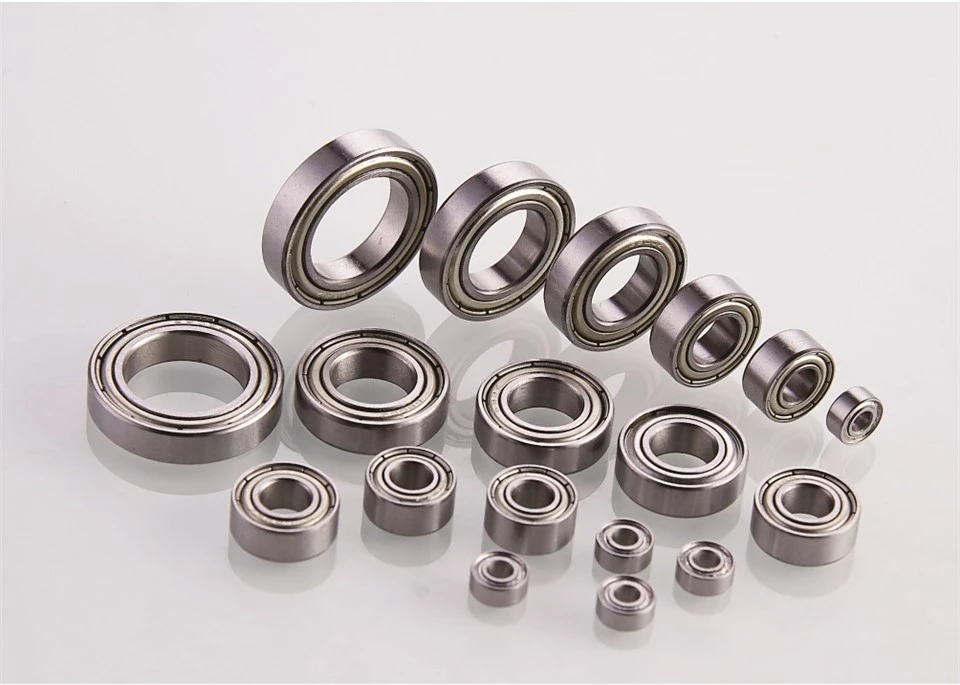

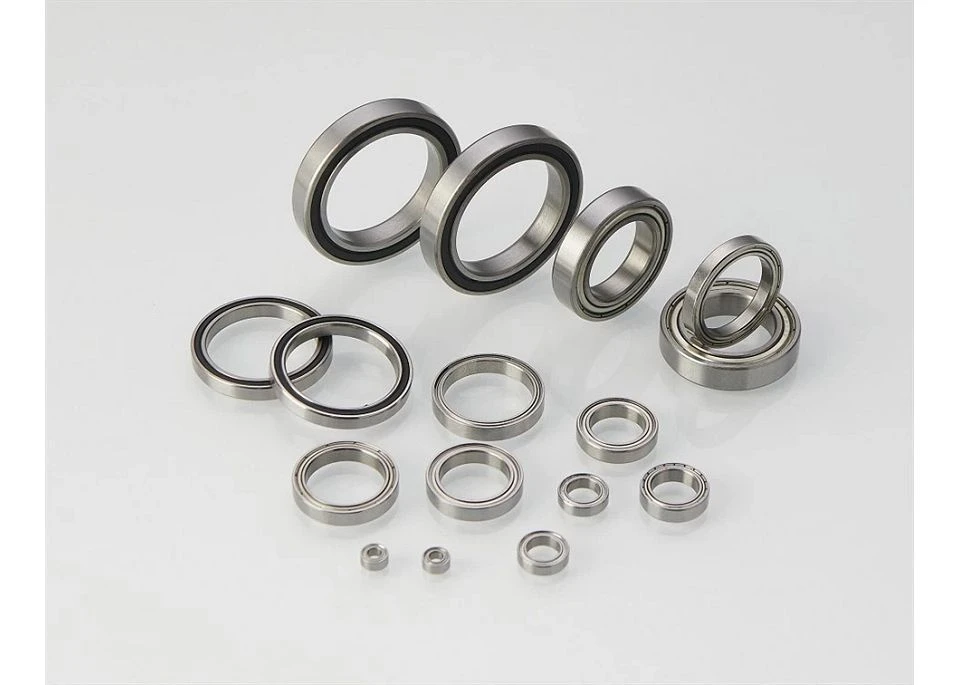
Open Type
An open-type deep groove ball bearing is a type of bearing that has no seals or shields and is open on both sides.
This means that the balls and inner and outer races are exposed to the environment, making them more susceptible to contamination and damage from debris, dirt, and moisture.
However, open-type bearings are often preferred in applications where the bearings are regularly cleaned or lubricated, or where low torque and high speeds are required.
Additionally, they can provide better heat dissipation than sealed or shielded bearings.
Open-type deep groove ball bearings are commonly used in industrial machinery, automotive applications, and other high-speed and high-temperature environments.
Sealed Type
A sealed-type deep groove ball bearing is a type of bearing that has seals on both sides of the bearing.
The seals are typically made of rubber or plastic and protect against contamination and moisture by forming a barrier around the balls and races.
Sealed-type bearings are ideal for applications where the bearing is exposed to heavy contamination or where a clean operating environment is critical.
They can also retain lubricant within the bearing, reducing the need for maintenance and prolonging the bearing's lifespan.
Sealed-type deep groove ball bearings are available in a variety of seal types, including contact seals, non-contact seals, and low-friction seals.
These bearings are commonly used in applications such as electric motors, automotive systems, and industrial machinery, where reliability and longevity are crucial.
Shielded Type
A shielded-type deep groove ball bearing is a type of bearing that has shields or protective covers on one or both sides of the bearing.
The shields are typically made of metal or rubber and protect against contamination and debris by forming a barrier around the balls and races.
The shields also help retain the lubricant within the bearing and prevent leakage.
Shielded-type bearings are commonly used in applications where the bearing is exposed to moderate to heavy contamination or where a cleaner operating environment is required.
They can also be suitable for applications with lower speeds and lower torque requirements.
Shielded-type deep groove ball bearings are available in a variety of shield types, such as single metal shields, double metal shields, and non-contact rubber seals, among others.
Snap Ring Type
A snap ring type deep groove ball bearing is a type of bearing that has a retaining ring or snap ring installed on the outer ring of the bearing.
The snap ring is a circular metal ring that fits into a groove on the outer diameter of the bearing's outer ring, holding it in place axially.
This design allows for easy assembly and disassembly of the bearing and can simplify the overall design of the application.
Snap ring-type deep groove ball bearings are commonly used in applications where there is a need for the axial location of the bearing, such as in gearboxes, transmissions, and other power transmission systems.
They are also suitable for applications that require frequent disassembly or maintenance, as the snap ring allows for quick and easy removal of the bearing from the shaft.
Flanged-Type
A flanged type deep groove ball bearing is a type of bearing that has a flange attached to one or both sides of the outer ring.
The flange is a flat or raised rim that provides additional support and stability to the bearing and facilitates mounting in the application.
Flanged-type bearings are commonly used in applications where space is limited or where a precise location of the bearing is required, such as in electric motors, pumps, and conveyors.
They can also simplify the overall design of the application by eliminating the need for additional components to support the bearing.
Flanged-type deep groove ball bearings are available in various flange shapes and sizes, including round, square, and oval, among others, to fit a wide range of applications.
Angular Contact Type
An angular contact type deep groove ball bearing is a type of bearing that is designed to accommodate both radial and axial loads by allowing the races to be angled relative to each other.
This design allows for higher axial load carrying capacity than standard deep groove ball bearings and can handle both thrust and radial loads simultaneously.
Angular contact-type bearings have a specific contact angle between the inner and outer races, which determines the level of axial load-carrying capacity.
These bearings are commonly used in high-speed applications such as machine tool spindles, pumps, and turbines, where precise positioning and high accuracy are required.
They are also suitable for applications where there are significant axial loads present, such as in automotive steering systems and gearboxes.
Angular contact-type deep groove ball bearings are available in various configurations and sizes to fit a wide range of applications.
Structure And Working Principle Of Non-Standard Deep Groove Ball Bearing
A deep groove ball bearing is one of the most common types of rolling bearing. The basic type of deep groove ball bearing consists of an outer ring, an inner ring, a set of steel balls, and a set of cages. There are two types of non-standard deep groove ball bearing, single-row, and double-row. The deep groove ball structure is also divided into sealed and open structures. The open type is the bearing without a sealing structure. The sealed deep groove ball is divided into a dustproof seal and an oilproof seal. Dustproof seal cover material for steel plate stamping, only to prevent dust into the bearing raceway. The oil-proof type is a contact oil seal, which can effectively prevent the grease inside the bearing from spilling out. Single row deep groove ball bearing type code for 6, double row deep groove ball bearing code for 4. Its simple structure and ease of use, is the most common production, the most widely used type of bearings.
Working principle
Non-standard deep groove ball bearing mainly bear radial load but also can bear radial load and axial load at the same time. When it only bears the radial load, the contact angle is zero. When the deep groove ball bearing has a large radial clearance and has the performance of angular contact bearings, can withstand a large axial load. The coefficient of friction of deep groove ball bearing is very small, and the limit speed is also very high.
Our Factory
Ningbo New Century Bearing Co., Ltd. was established in October 1987. It is a manufacturer specializing in the production of precision miniature bearings. The registered trademarks are "SX" and "SXA". The company covers an area of 52,000 square meters and a workshop area of 43,000 square meters. The R&D team composed of professional engineers has more than 350 skilled workers, with an annual output of 90 million sets.
The company has its own bearing parts factory, which produces rings, cages, shield and seals, which can deal with flexible and diverse Market demand. The product types mainly include deep groove ball bearings, flange bearings, stainless steel bearings. Bearing precision can reach P5 level (ABEC-5), and the noise can reach Z4V4. Ultra-thin-wall miniature bearings are the company's specialty products.

Asked Questions
We're professional non-standard deep groove ball bearing manufacturers and suppliers in China. If you're going to wholesale non-standard deep groove ball bearing made in China, welcome to get quotation from our factory. Also, customized service is available.