


F6701ZZ/2RS Bearing
Inner diameter: 10mm
Outer diameter: 18mm
width (open type ): 4mm
width (Shield type): 4mm
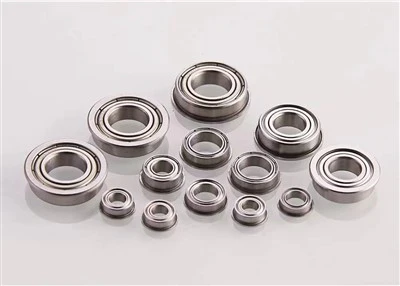
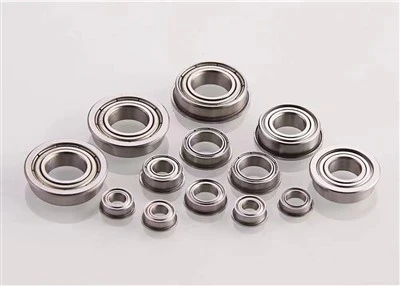
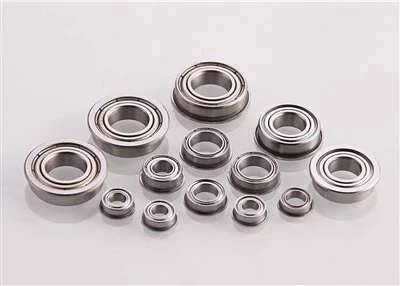
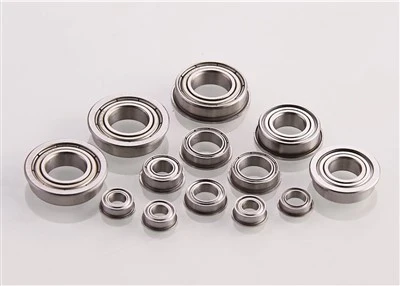
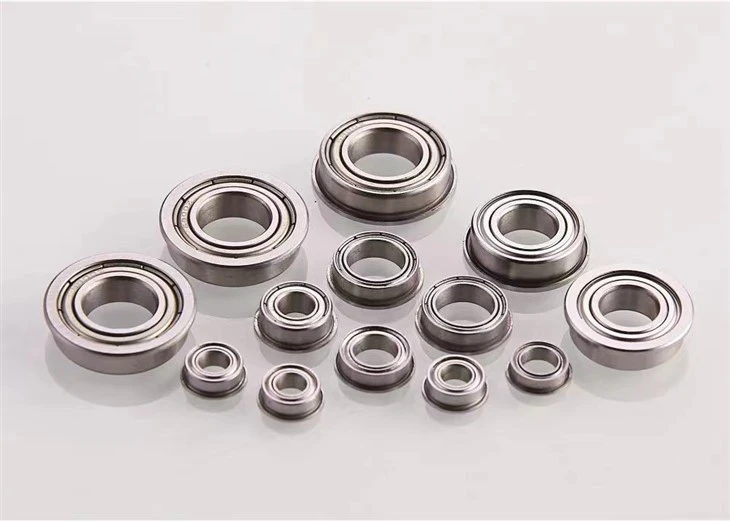
Flange Deep Groove Ball Bearing
What Is Flange Deep Groove Ball Bearing
This is a radial ball bearing with a flange featured on one side of the outer ring surface. Enables easy positioning in the axial direction when mounting to the housing.
Benefits of Flange Deep Groove Ball Bearing
Strong load-bearing capacity
Due to the effect of the flange, flange deep groove ball bearing can withstand large axial, radial and torque loads. This makes it widely used in high-load and high-speed mechanical equipment.
High speed
Due to the characteristics of rolling friction, flange deep groove ball bearing can withstand higher speeds. This makes it widely used in mechanical equipment that requires high-speed rotation.
Small friction coefficient
Flange deep groove ball bearing using rolling friction have a smaller friction coefficient than sliding friction. This not only reduces power consumption, but also reduces wear and heat generation, thereby increasing the service life of the bearing.
Compact structure
The overall structure of the flange deep groove ball bearing is simple, and installation and maintenance are relatively convenient. At the same time, due to the presence of the flange, it can be directly connected to other components, reducing additional installation procedures and parts, thereby reducing installation costs.
-
![flange deep groove ball bearing]()
-
![flange deep groove ball bearing]() flange deep groove ball bearingMF63ZZ/2RS Bearingread more
flange deep groove ball bearingMF63ZZ/2RS Bearingread more
Inner diameter: 3mm
Outer diameter: 6mm
width (open type ): 2mm width (Shield type): 2.5mm -
![flange deep groove ball bearing]() flange deep groove ball bearingMF128Bearingread more
flange deep groove ball bearingMF128Bearingread more
Inner diameter: 8mm
Outer diameter: 12mm
Flange Outer diameter: 13.2mm
width (open type B): 2.5mm -
![flange deep groove ball bearing]() flange deep groove ball bearingMF117Bearingread more
flange deep groove ball bearingMF117Bearingread more
Inner diameter: 7mm
Outer diameter: 11mm
Flange Outer diameter: 12.2mm
width (open type B): 2.5mm -
![flange deep groove ball bearing]() flange deep groove ball bearingMF126Bearingread more
flange deep groove ball bearingMF126Bearingread more
Inner diameter: 6mm
Outer diameter: 12mm
Flange Outer diameter: 13.2mm
width (open type B): 3mm -
![flange deep groove ball bearing]() flange deep groove ball bearingMF106Bearingread more
flange deep groove ball bearingMF106Bearingread more
Inner diameter: 6mm
Outer diameter: 10mm
Flange Outer diameter: 11.2mm
width (open type B): 2.5mm -
![flange deep groove ball bearing]() flange deep groove ball bearingMF105 Bearingread more
flange deep groove ball bearingMF105 Bearingread more
Inner diameter: 5mm
Outer diameter: 10mm
Flange Outer diameter: 11.2mm
width (open type B): 3mm -
![flange deep groove ball bearing]() flange deep groove ball bearingMF104 Bearingread more
flange deep groove ball bearingMF104 Bearingread more
Inner diameter: 4mm
Outer diameter: 10mm
Flange Outer diameter: 11.2mm
width (open type B): 3mm -
![flange deep groove ball bearing]() flange deep groove ball bearingMF84 Bearingread more
flange deep groove ball bearingMF84 Bearingread more
Inner diameter: 4mm
Outer diameter: 8mm
Flange Outer diameter: 9.2mm
width (open type B): 2mm -
![Deep groove ball bearing]() Deep groove ball bearingMF63 Bearingread more
Deep groove ball bearingMF63 Bearingread more
Inner diameter: 3mm
Outer diameter: 6mm
Flange Outer diameter: 7.2mm
width (open type B): 2mm -
![Deep groove ball bearing]() Deep groove ball bearingMF74 Bearingread more
Deep groove ball bearingMF74 Bearingread more
Inner diameter: 4mm
Outer diameter: 7mm
Flange Outer diameter: 8.2mm
width (open type B): 2mm -
![Deep groove ball bearing]() Deep groove ball bearingMF85 Bearingread more
Deep groove ball bearingMF85 Bearingread more
Inner diameter: 5mm
Outer diameter: 8mm
Flange Outer diameter: 9.2mm
width (open type B): 2mm



Why Choose Us
Quality Assurance: ISO9001, IS014001, ISO45001, IATF16949, high-tech enterprise, specialized new enterprise.
Cutting-edge technology: The company has its own bearing parts factory, which produces rings, cages, shield and seals, which can deal with flexible and diverse Market demand.
Quality Services: We have a professional R&D and design team that designs and develops according to customer requirements and usage conditions.Professional guidance on the use and installation of bearings, making every effort to ensure bearing quality, and fully cooperating with after-sales service.
Application of Flange Deep Groove Ball Bearing
Mechanical manufacturing industry: Flange deep groove ball bearing are widely used in machine tools, cnc machine tools, grinding machines, lathes, and various other mechanical equipment. They bear the load of rotating parts in these devices, ensuring stable operation and precise processing.
Power industry: In the power industry, flange deep groove ball bearing are used in generators, pumps, wind turbines, and other equipment to support rotating parts such as rotors and blades, ensuring reliable operation of the equipment.
Automotive manufacturing industry: In the automotive manufacturing industry, flange deep groove ball bearing are widely used in engines, transmissions, transmission systems, steering systems, and other components. They can withstand high-speed rotation and complex loads, ensuring the stability and reliability of automobiles.
Aerospace industry: In the aerospace industry, flange deep groove ball bearing are used in critical components such as aircraft engines, landing gear, and rudders. They can withstand the loads of high-speed flight and complex environments, ensuring the safety and reliability of the aircraft.
Agricultural machinery: In agricultural machinery, flange deep groove ball bearing are used in tractors, harvesters, seeders, and various other agricultural equipment. They can withstand heavy loads and work in harsh environments, ensuring smooth agricultural production.
Food processing industry: In the food processing industry, flange deep groove ball bearing are used in mixers, conveyors, baking equipment, and various other food processing equipment. They are usually made of stainless steel or specially lubricated to meet food hygiene and safety requirements.
Textile industry: In the textile industry, flange deep groove ball bearing are used in spinning machines, looms, printing machines, and various other textile equipment. They can withstand the requirements of high-speed operation and continuous work, ensuring efficient textile production.
Flange deep groove ball bearing are suitable for various application scenarios in different industrial sectors such as mechanical manufacturing, power, automotive, aerospace, agriculture, food processing, and textile. They play a key supporting and transmission role in these fields, ensuring the normal operation and efficient production of various mechanical equipment.
Types of flange deep groove ball bearing
01/
Single row flange deep groove ball bearing
One of the most commonly used deep groove ball bearings. Made with either open bearings or with steel or rubber shields depending on the requirements of the machine using it. Provides a high load capacity and flexibility.
02/
Extra small bearings and miniature ball bearings
Containing small balls which are used as rolling elements. Deep groove miniature ball bearings come in five subcategories — standard, flanged outer ring, expanded one ring, thin section, and extended inner ring.
03/
Maximum type ball bearings
These ball bearings are designed with many more rolling elements than other flange deep groove ball bearing. This allows for high precision and high performance. Available in either open or shielded designs depending on what the application and requirements are. Made from pressed steel to deliver high performance and high load capacity.
04/
Magneto flange deep groove ball bearing
This style of deep groove bearing contains a deeper inner ring than other types. Designed with one shoulder on the outer ring which allows it to be removed for easy maintenance and mounting. They come in smaller sizes than other types and deliver high levels of precision.
The Difference Between Angular Contact Bearings And Flange Deep Groove Ball Bearing

Different types and load directions
Flange deep groove ball bearing
Flange deep groove ball bearing are the most common type of rolling bearings. Mainly bear radial load, but also can bear radial load and axial load at the same time. When it only bears radial load, the contact angle is zero. When the deep groove ball bearing has a large radial clearance, it has the performance of an angular contact bearing and can bear a large axial load. The friction coefficient of the deep groove ball bearing is very small and the limit speed is also high.
Angular contact ball bearings
There is a contact angle between the ring and the ball. The standard contact angles are 15/25 and 40 degrees. The larger the contact angle, the greater the axial load capacity. The smaller the contact angle, the more conducive to high-speed rotation. Single row bearings can withstand radial load and unidirectional axial load, db combination, df combination and double row angular contact ball bearings can bear radial load and bidirectional axial load, dt combination is suitable for large unidirectional axial load and the rated load of a single bearing for insufficient occasions, ach type bearings are used at high speeds, which have small ball diameters and many balls, and are mostly used for machine tool spindles. In general, angular contact ball bearings are suitable for high-speed, high-precision rotating occasions.
Differences in structure
Flange deep groove ball bearing and angular contact ball bearings with the same inner and outer diameter and width dimensions have the same inner ring size and structure, but the outer ring size and structure are different:
1. Flange deep groove ball bearing have double shoulders on both sides of the outer ring groove, while angular contact ball bearings generally have single shoulders;
2. The curvature of the outer ring of flange deep groove ball bearing is different from that of angular contact balls, the latter is often greater than the former;
3. The position of the outer ring of the deep groove ball bearing is different from that of the angular contact ball bearing. The specific value of the non-central position is considered during the design of the angular contact ball bearing and is related to the degree of contact angle;
In terms of use:
1. The two uses are different. Flange deep groove ball bearing are suitable for bearing radial forces, smaller axial forces, combined radial loads and moment loads, while angular contact ball bearings can bear single radial loads and larger shafts. Directional load (different with different contact angles), double paired (different with different matching methods) can bear bidirectional axial load and moment load.
2. The limiting speed is different. The limiting speed of angular contact ball bearings of the same size is higher than that of flange deep groove ball bearing.
Materials Used In Balls In Flange Deep Groove Ball Bearing
Roller Bearing Steel 1.3505/100Cr6
Metal flange deep groove ball bearing typically use hardened steel for the balls. Chrome steel, which contains approximately 1% carbon and 1.5% chromium, is a common material for these bearings due to its durability and performance.
Martensitic chrome steel balls are ideal for flange deep groove ball bearing due to their stability and durability during continuous operation. These balls are robust and resistant to wear. Roller bearing steel, used for needle and cylindrical rollers, also offers durability and resistance to corrosion, making it well-suited for demanding applications.
Stainless Steel 1.4401 and 14401
This material is used for plastic flange deep groove ball bearing, which feature stainless steel balls that are not hardened. These balls are highly resistant to corrosion, including saltwater and alkalis. Unlike hardened steel balls, which are unsuitable for flange deep groove ball bearing, stainless steel balls are used due to their compatibility with the plastic ring material. The strength of the plastic limits the maximum load capacity of the bearings. Stainless steel balls are also more cost-effective compared to glass balls.
Soda-Lime Glass
Glass balls are used in metal-free ball bearings, especially when high chemical resistance is required. Soda-lime glass, commonly used in bottles, flat glass, and drinking glasses, is also utilized for ball bearings. It offers good chemical resistance, making it suitable for bearings exposed to mild chemical stress. However, it is not ideal for severe chemical environments. Soda-lime glass is sometimes referred to as "lemon glass" due to its light green hue.
Borosilicate Glass
Borosilicate glass is significantly more expensive than soda-lime glass but offers superior chemical resistance, making it suitable for applications involving strong acids. The advantages of borosilicate glass are outlined below:
- Excellent heat resistance and also resistance to temperature changes
- Mechanical stability
- Very low coefficient of linear expansion
- Aluminum Oxide
Ceramic ball bearings use balls made from aluminum oxide, also known as oxide ceramics, which have a polycrystalline structure. These ceramic balls are lightweight and offer excellent properties such as high resistance to corrosion, abrasion, and heat.
They are highly resistant to corrosion from water, acids, and salt solutions but should avoid contact with hydrochloric acid, hydrofluoric acid, strong alkaline solutions, and warm sulfuric acid. Additionally, these ceramic balls are self-lubricating and electrically insulating. They are typically white to ivory in color and are manufactured according to ASTM F 2094 Class II/III standards.
Silicon Nitride
Balls made from silicon nitride ceramic are lightweight yet exceptionally tough and corrosion-resistant. While they are highly resistant to many acids and base solutions, they can be affected by certain corrosive substances. Silicon nitride also has insulating properties. These balls are self-lubricating and exhibit excellent resistance to temperature fluctuations, which can be beneficial for performance. However, silicon nitride balls are significantly more expensive than those made from aluminum oxide. They typically have a black, mother-of-pearl color.
Our Factory
Ningbo New Century Bearing Co., Ltd. was established in October 1987. It is a manufacturer specializing in the production of precision miniature bearings. The registered trademarks are "SX" and "SXA". The company covers an area of 52,000 square meters and a workshop area of 43,000 square meters. The R&D team composed of professional engineers has more than 350 skilled workers, with an annual output of 90 million sets.
The company has its own bearing parts factory, which produces rings, cages, shield and seals, which can deal with flexible and diverse Market demand. The product types mainly include deep groove ball bearings, flange bearings, stainless steel bearings. Bearing precision can reach P5 level (ABEC-5), and the noise can reach Z4V4. Ultra-thin-wall miniature bearings are the company's specialty products.

Asked Questions
We're professional flange deep groove ball bearing manufacturers and suppliers in China. If you're going to wholesale flange deep groove ball bearing made in China, welcome to get quotation from our factory. Also, customized service is available.